
Phoenix Forensic Service Provider
Phoenix Forensic Service Provider

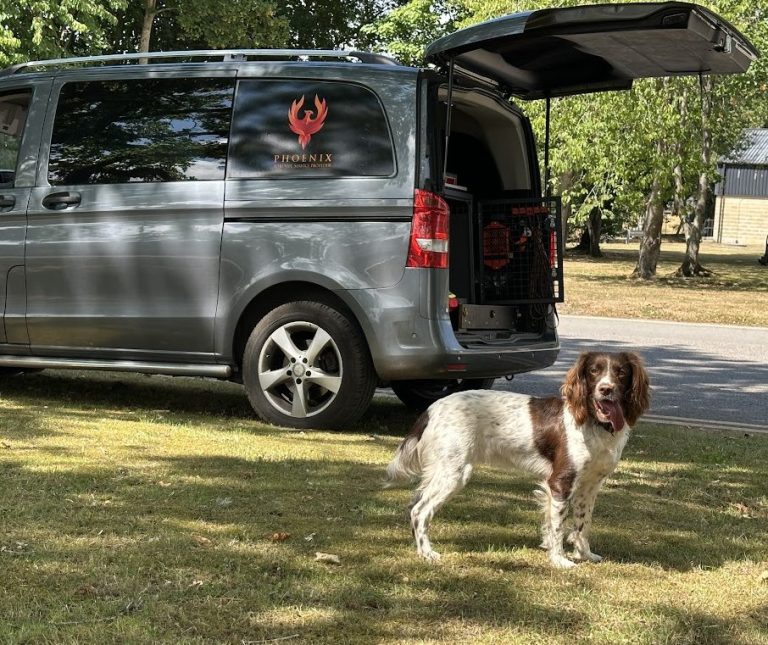
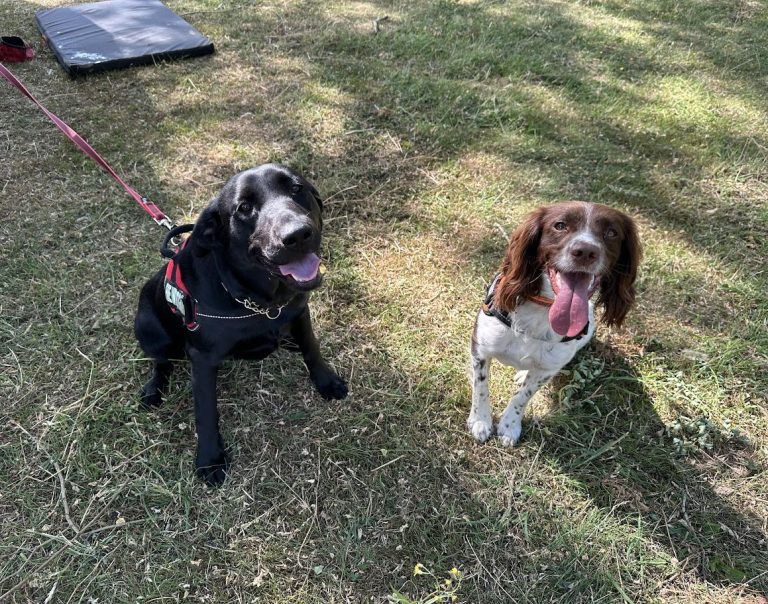
Phoenix Forensic Service Provider currently has three dedicated Fire Investigation ILR Detection K9 Teams, able to provide support tailored to our clients' needs - Fire & Rescue, Police or the private and Insurance sector. We leverage years of fire investigation experience and professional K9 handling, providing a valuable capability during fire scene examinations or searches.
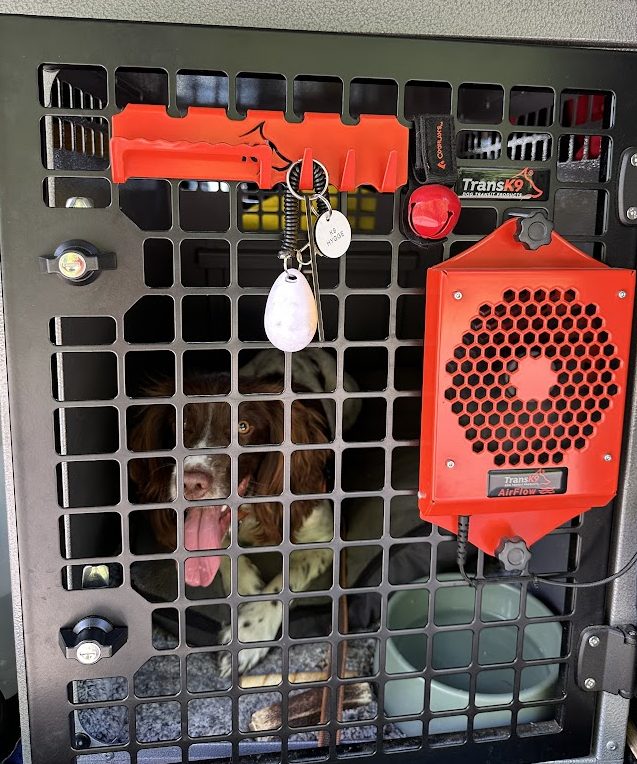
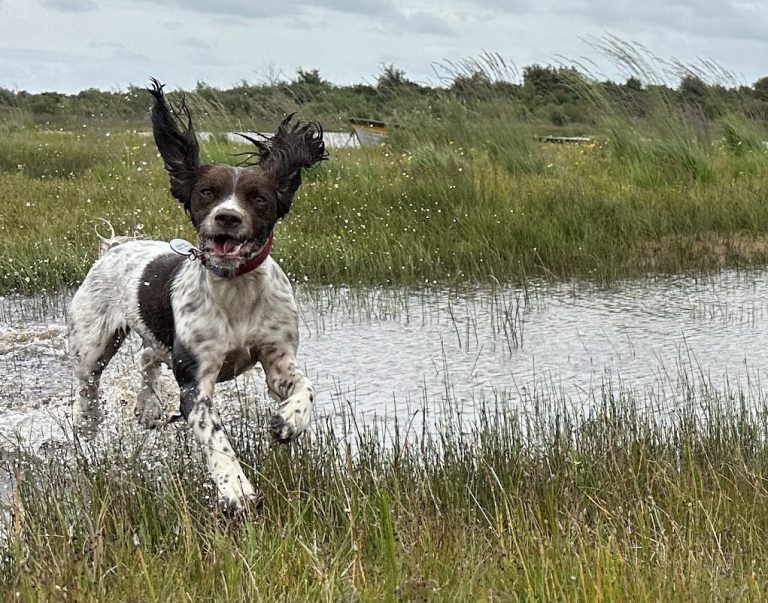
Our dogs live, train, work and play with their Handlers, the special bond between K9 and Handler enhancing the operational capability of the team. As well as continual training and annual certification, their health and wellbeing is paramount - the Handler will always risk assess the fire scene for hazards to the dogs, ensure the correct canine PPE is used and continually monitor the dog whilst it's working. Our BS compliant vehicles are equipped with transport cages, air conditioning and K9 first aid kits, whilst we also ensure the highest level of Veterinary care and Insurance (PLI and Canine).
'Fire Investigation dogs' (K9s) play an important role in determining the presence of Ignitable Liquid Residues at a fire scene - the portion of an ignitable liquid that remains (doesn't burn off). Their skill at detecting the presence of ignitables at a scene is invaluable to investigators as they can find the presence of ignitable liquids that could otherwise go undetected, and reduce excavation time by pinpointing areas of interest.
There are currently around 16 Fire Investigation dogs in the UK, some serving with Fire & Rescue Services and others working privately (working for FRS, Police and insurance companies).
If the presence of an Ignitable Liquid is suspected, or if a fire happened in suspicious circumstances, a Fire Investigation K9 Team is called to the scene to help indicate potential evidence.
Fire dogs are trained to detect around ten different 'target substances', many of which are odourless to humans. The range usually includes those likely to be found in fire scenes:
The dogs will equally indicate on an ignition source such as a cigarette lighter with liquid/residue in it.
Fire dogs can also be called upon to further assist an investigation away from the fire scene, by searching a suspect’s house or clothing for Ignitable Liquids, to gather evidence against an individual.
Training
Fire dogs are often chosen when they are puppies and are secured from breeders of working gun dogs or search dogs. Cocker Spaniels, English Springer Spaniels and Labradors are the most common breeds to be trained as fire dogs thanks to their energy and willingness to 'work', agility, keen sense of smell and natural obedience/trainability.
Initial 'puppy training' focuses around bonding and trust with the Handler, basic obedience and being handled/transported - they then move on to search training in a wide range of environments, with distractions, to train the dog to keep focused.
The dog is then introduced to the range of ignitable liquids through initial liquid residue identification - this is always for fun and positive reward, when they correctly recognise a target substance they get their reward and lots of praise/fun. This imprints the scent on the dog for life, and associates it with fun/reward. Training times vary, but on average it takes six to eight months for a dog to be fully trained as a fire investigation dog.
Deployment/Tasking
Fire dogs are never sent into fire scenes that are still burning or even warm, Handlers will make sure the scene is ‘cold’ and conduct a Risk Assessment before the Fire Investigation K9 team is committed. Sometimes the risk excludes a dog being committed, due to risk of injury (for the dogs protection and that they are a valuable asset! An injured paw can mean being Off The Run for many days/weeks).
To avoid potential cross contamination of scenes, two K9 Teams or dogs may be used at one scene, one for the area/room of interest and another for the general scene.
A well trained K9 team can massively reduce investigation time as they are able to easily and quickly detect ignitable liquid residues within a fire scene or in open areas, in comparison to electronic scene equipment (such as PIDs), which relies on very targeted sampling. With their acute sense of smell Fire dogs can detect the subtle differences between hydrocarbons naturally produced during high heat combustion, and hydrocarbons introduced in intentional fires which even modern technology struggles to differentiate.
The dog may 'show interest' in an area and/or give a 'positive indication' to one of its target substances. Each dog will indicate slightly differently, the Handler interprets the dogs body language and actions. A passive indication is preferred so as not to potentially disturb evidence. The dog is rewarded, usually with their favourite toy, such as a squeaky tennis ball.
A positive indication is only 'for information', the Handler writing a statement for the Fire Investigator to consider - following a positive indication sample/s are removed for detailed analysis at a forensic laboratory to determine which Ignitable Liquid was present and these results become the 'evidence'.
Equipment
When searching a fire scene, fire dogs may wear protective equipment, against the Handlers risk assessment. The equipment is lightweight and non restrictive, not impeding the dog, and can include:
A high visibility harness - some handlers add a bell and/or cyalume stick to aid tracking of the K9 when off leash
Protective boots to protect from broken glass and debris
Eye goggles to protect against dust
Full body suits - to protect against contamination (from asbestos for example) or to act as barrier clothing to avoid cross contamination
Full body lifting harness - for hauling the dog aloft/rope access
Flotation device - for working near or on water/pits etc.
Certification and CPD
Fire Investigation K9 Teams must be assessed and tested annually, and be 'certified' (or 'licenced'). This is done through the Fire Service College and Police Force Dog Sections. Both the Handler and the K9 and assessed - how well the two work together, as well as the ability, accuracy and consistency of the dog. Handlers are tested on their control of the dog, their knowledge of canine care, and if the handler and dog can work effectively as a team.
Handlers conduct continual training with their dog such as 'scent discrimination' exercises using rows of pots/tins, across the range of target substances and 'confusants' (strong smelling household substances (such as coffee and curry powder), search training in different locations for environmental familiarisation and CPD days with other K9 Teams and trainers. CPD records are maintained for each K9 Team (these are inspected as part of the annual Certification assessment).
Welfare, Transportation and Kenneling
The welfare of the dog is paramount to the Handler, DEFRA animal welfare guidelines and British Standards BS 8517-2 Code of practice for the use of detection dogs should be adhered to.
Vehicles should have:
The Handler will initially clean and decontaminate the dog and equipment at the scene, using decontamination wipes and water sprays. On return to base/home more thorough grooming and bathing is completed.
Fire Dogs are usually regularly groomed and clipped to reduce hair length, which can become easily contaminated.
Regular health screening is conducted and Animal Health Certificates apply if the dog is transported abroad.
The dog/s will usually live at home with the Handler and when 'off duty' enjoy a 'normal' dogs life!
Retirement
Fire dogs generally retire after a working life of around seven or eight years, but some can work longer if they showing willing and are passing their annual certification tests.
Fire investigation dogs often stay with their handler once they retire.
Using our professional capability, we can support you with fire scene examinations and searches,
informing your investigations as to whether ignitable liquids were present.
We need your consent to load the translations
We use a third-party service to translate the website content that may collect data about your activity. Please review the details in the privacy policy and accept the service to view the translations.